Junk Pile Prophecy: How to Know Which $3 Thrift Store Find Will Be Worth a Thousand Stories in Five Years
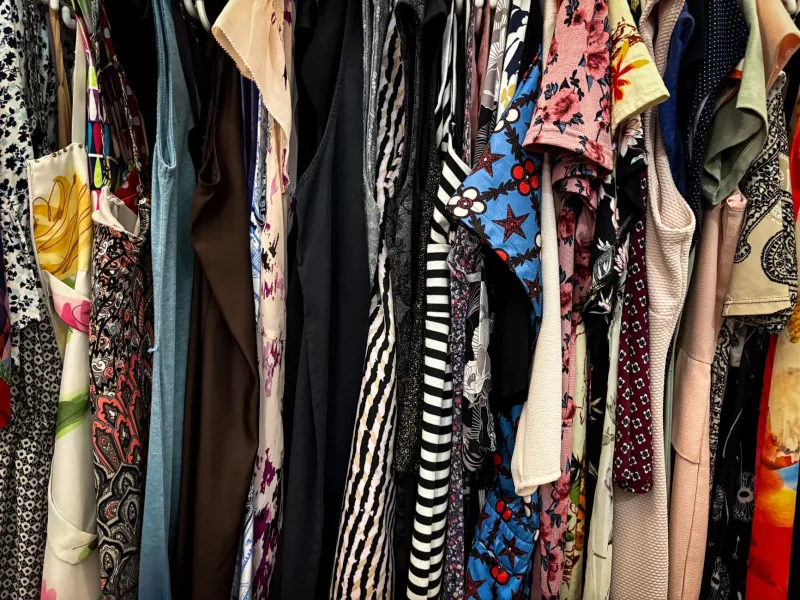
Here's the uncomfortable truth nobody at the Goodwill is going to tell you: ninety percent of what's on those racks is there for a reason. Someone bought it, wore it once to a cousin's gender reveal, and donated it with the energy of a person releasing a burden. It was a mistake when it was purchased new. It is still a mistake now. The markdown didn't fix it.
But then — then — there's the other ten percent. The piece that makes you stop mid-shuffle, hold it up under the fluorescent lights, and feel something shift in your chest. That's not a shopping impulse. That's a prophecy.
The whole game at the thrift store isn't about finding something cheap. It's about finding something inevitable — a piece that was always going to end up in your closet, it just took the scenic route through three other people's regrets to get there. The question is how you train your eye to spot the difference before some other unhinged fashion person beats you to it.
The Longevity Test Nobody Talks About
Forget trends. Seriously, just put them down. Trend-chasing at a thrift store is the fastest way to fill your closet with stuff that felt exciting for six weeks in 2019 and now radiates a very specific secondhand shame.
The real question you're asking when you hold something up is: does this have a reason to exist beyond the moment it was made? That sounds abstract, but it's actually very practical. Run it through three filters.
First: construction. Turn the garment inside out. Right now, in the aisle, with zero apology. Check the seams. Are they finished? Is the lining actually attached, or is it hanging on by the fashion equivalent of a prayer? Heavy-duty stitching, French seams, bound buttonholes, fabric that has actual weight to it — these are signs that someone, at some point, gave a damn. Fast fashion doesn't give a damn. Fast fashion gives you a $7 dress that disintegrates in the wash like a secret. Real construction is a commitment, and you can feel it.
Second: material honesty. Natural fibers — wool, silk, cotton, linen, leather — age. They develop character. They tell a story. Polyester from 2003 just gets shinier and sadder. If the tag says something like "100% virgin wool" or "pure silk" or even "genuine leather," that's a piece that has somewhere to go. Blends can be fine, but the higher the synthetic content, the lower the ceiling.
Third: silhouette logic. Some shapes are genuinely timeless. The oversized blazer. The straight-leg trouser. The A-line midi skirt. The boxy button-down. These silhouettes cycle in and out of trend but never fully disappear because they work on actual human bodies in actual human situations. If a piece has one of these foundational shapes, it has staying power regardless of what print or color it's wearing.
The Difference Between "Interesting" and "Legendary"
This is where most thrift shoppers blow it. They find something interesting — a wild print, a bizarre cut, a color combination that shouldn't work — and they buy it on the energy of the moment without asking whether it has legs.
Interesting fades. Legendary compounds.
A legendary piece is one that you'll still be able to explain in ten years. Not justify — explain. "This is a 1970s Halston-era wrap dress I found for four dollars and it fits like it was cut for me" is a sentence with narrative power. "This is a 2017 fast-fashion leopard print bodycon I grabbed because it was $1.50" is a sentence that ends in a garbage bag.
Legendary pieces tend to have some kind of specific identity. They're not trying to be everything. A really exceptional vintage denim jacket from the '80s isn't versatile in the Pinterest-board sense — it's definitive. It has a point of view. It has history baked into the fade pattern. That specificity is exactly what makes it irreplaceable, which is exactly what makes it worth carrying forward.
Red Flags That Belong in the Donation Bin (Again)
Look, not everything deserves to be saved. Part of the thrift store skill set is knowing when to put something back with zero guilt.
Walk away from anything that smells like a problem that dry cleaning cannot solve. Walk away from pieces with structural damage — broken zippers on cheap mechanisms, collars that have been ironed into a permanent crime, hems that have been re-hemmed three times and now sit at a height that works for no known human leg length.
Be especially cold-blooded about novelty items. The sweater with a giant sequined cat on it. The vest covered in embroidered footballs. The dress that was clearly purchased for a specific themed party and has never recovered its sense of self. These are not future heirlooms. These are archaeological evidence of someone else's lapse in judgment, and you are not the curator of that museum.
The Emotional Sniff Test (Yes, Really)
After all the practical filters, there's one more thing — and it's the one that separates the people who find genuinely legendary pieces from the people who find technically solid pieces that just sit in the closet.
Do you want to wear it? Not "could you imagine an outfit around it" or "would this look good on someone" — do you, specifically, in your actual life, want to put this on your body and walk out of the house?
Because a heirloom isn't just a well-constructed garment. It's a well-constructed garment that you actually wore. The stories that make a piece legendary are stories that happened because you showed up in it. A perfect vintage blazer hanging in your closet for five years isn't an heirloom. It's a hostage.
The whole point of finding something with staying power is that you become part of its history. You're not just recognizing its value — you're adding to it. Every time you wear a piece with genuine bones, you're making the argument that some things are worth keeping, worth repairing, worth passing along. In a culture that would rather sell you something new every three weeks, that's not just a fashion choice.
That's a stance.
So the next time you're elbow-deep in a $2 rack at your local Goodwill, surrounded by the ghosts of everyone else's impulsive purchases, remember: you're not just shopping. You're prospecting. Most of it is gravel. But every once in a while, you pull out something that was always meant to be yours — it just needed you to be paying attention.