The $4 Prada Problem: What Nobody Tells You About Finding Real Designer at Goodwill
Photo: designer handbag thrift store secondhand shop discovery vintage luxury, via cs14.pikabu.ru
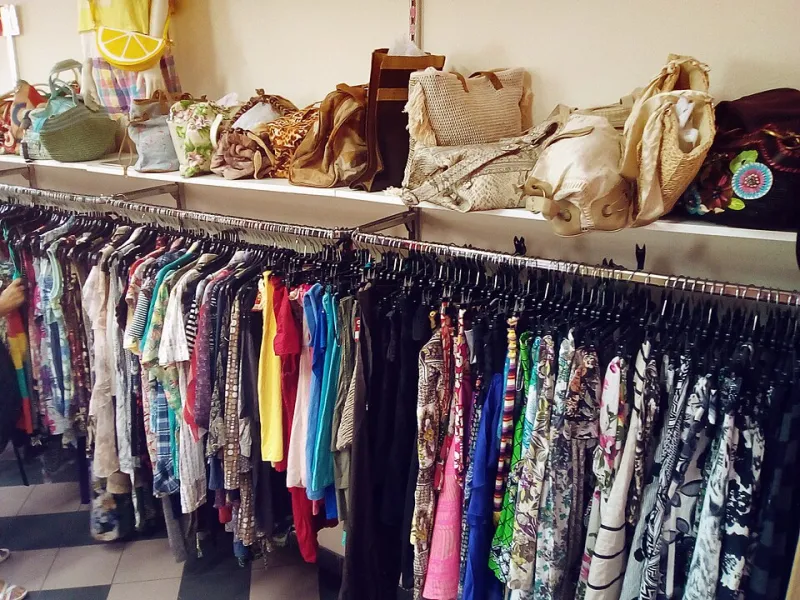
Let's set the scene. It's a Tuesday. You're in a Goodwill somewhere between a Waffle House and a payday loan place, aggressively sifting through a rack of donated office wear, when your fingers land on something. The stitching is different. The hardware is heavy in that particular, almost offensive way. You flip the tag. Your pulse does something medically questionable. It's real. It's genuinely real. And it costs $4.99.
This is the moment that divides your life into before and after.
What nobody prepares you for — not the thrift influencers, not the vintage resellers, not the smug YouTube haul videos — is what happens next. Because finding designer at Goodwill isn't just a shopping victory. It's the beginning of a deeply unhinged psychological journey that will rewire the way you understand wealth, status, and the completely fictional story that luxury brands have been telling everyone for decades.
The Find Itself Is Almost Too Much to Process
The first thing you feel is suspicion. Because your brain, which has been trained by a lifetime of retail logic, cannot accept that a $900 item is sitting in a bin next to a Crocs knockoff and someone's donated collection of motivational cat posters. You check the stitching twice. You Google the serial number in the parking lot. You send seventeen photos to your most fashion-literate friend with the message: is this real or am I losing my mind.
It's real. It's always real. And that realization — that the entire value structure of luxury fashion is essentially just a very expensive game of pretend — is the kind of thing that changes a person.
Because here's what just happened: some wealthy person decided they were done with an object that cost them a significant chunk of money, donated it to a nonprofit thrift chain, and it landed in your hands for approximately the price of a vending machine snack. The object didn't change. The quality didn't change. The only thing that changed was the story attached to it. And you now have a much better story.
Wearing It Is an Act of Psychological Warfare (Congratulations)
The real chaos starts when you actually wear the thing in public. Specifically, in front of people who paid full price for something similar and very much need you to know that they paid full price for it.
There is a specific kind of person — you know this person, you've been to brunch with this person — who drops the retail price of their accessories into conversation the way other people drop weather observations. Oh this? It was like twelve hundred dollars. Cool. Cool cool cool. Your version of that exact conversation goes: Oh this? Four dollars. Goodwill. Tuesday. And the expression that flickers across their face in that moment is worth more than the object itself.
It's not quite anger. It's not quite admiration. It's something more existential — a brief, involuntary confrontation with the possibility that everything they've been told about what luxury means might be completely made up. Which it is! But most people prefer not to think about that while they're trying to enjoy their avocado toast.
The Anxiety Nobody Talks About
Here's the part that the celebratory thrift haul content always skips: sometimes the find comes with genuine anxiety attached. Because owning expensive things without the expensive origin story is its own weird psychological territory.
You might catch yourself pre-explaining. This is vintage. I got it secondhand. I didn't, like, spend money on this. Which is fascinating, right? The impulse to apologize for having something nice is deeply baked into a certain kind of American middle-class guilt. As if enjoying a beautiful object requires a financial suffering disclaimer to remain morally acceptable.
Or you flip the other direction entirely and decide to just say nothing, which carries its own energy. Someone compliments the bag and you smile and say thank you like a person who absolutely knows the exact retail price and has chosen not to share it. That silence is its own kind of power move. Let them assume. Let them wonder. Let the ambiguity do its work.
The Deeper Truth About What You Actually Found
Strip away the brand mythology for a second and look at what thrifted luxury actually represents. Someone made something well. Really, genuinely well — with materials and craftsmanship that were built to last decades. That object survived its original owner, survived donation, survived the sorting process, survived the rack, and found its way to you. That's not a consolation prize version of luxury. That's the full experience, minus the part where a brand charges you for the privilege of their logo.
The Goodwill score isn't the knockoff version of the real thing. In a lot of ways, it is the real thing — more real, even, because it exists completely outside the performance of wealth. You didn't buy status. You found an object. Those are fundamentally different transactions, and only one of them is actually interesting.
How to Wear Your Accidental Fortune Without Imploding
First: stop pre-explaining. You don't owe anyone the origin story of your accessories. The bag is the bag. It speaks for itself.
Second: learn the difference between sharing a great find and performing humility. Telling your actual friends about a wild Goodwill score is fun and connective and genuinely worth doing. Announcing it loudly in front of someone who just dropped real money on the same brand is a different activity entirely — one that requires intention and a certain commitment to chaos.
Third: sit with the discomfort of having nice things. The anxiety is telling you something about how you've been taught to understand your own worth relative to the objects you own. That's worth examining, ideally while wearing your $4 find somewhere extremely public.
And fourth: go back. Because the person who found one real thing in a Goodwill bin is statistically the person who finds another one. The eye develops. The instincts sharpen. The Tuesday afternoon thrift runs become their own kind of ritual — a regular reminder that the entire luxury market is, at its core, just a very long, very expensive piece of fanfiction that you are now writing yourself, on your own terms, for basically nothing.
The $4 Prada problem isn't really a problem at all. It's an origin story. Welcome to the good timeline.