Every Day Is Halloween If You're Brave Enough: The Case for Living in Your Costume
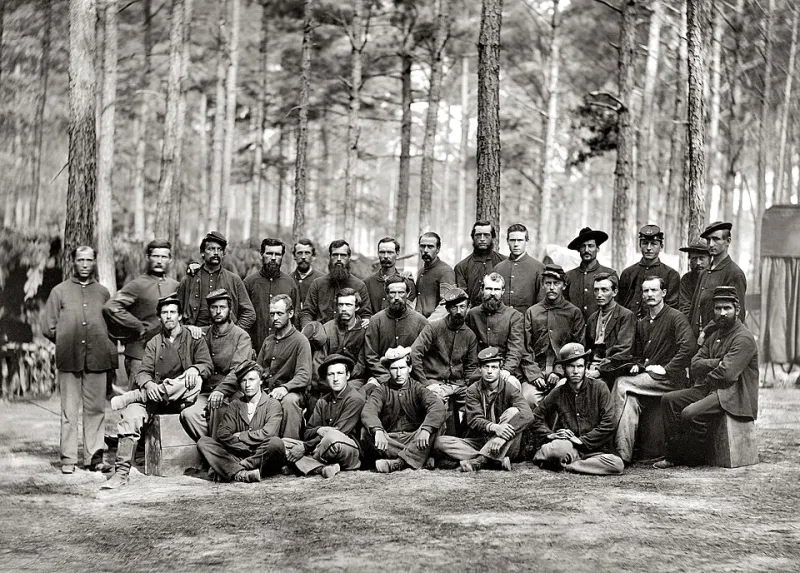
Photo: Unknown authorUnknown author, Public domain, via Wikimedia Commons
Every October, something magical happens. Regular people — people who spend the other eleven months in business casual and weekend-appropriate denim — suddenly discover that they are capable of dressing with total, unhinged commitment. They show up to parties in full Victorian mourning wear, or elaborate fantasy armor, or head-to-toe theatrical makeup, and they are alive in a way that their Tuesday morning Zoom presence simply cannot replicate.
And then November 1st hits and they box it all up.
This is the tragedy we're here to address.
The Costume Was Always the Point
The cultural agreement around Halloween costuming has always been a little suspicious if you think about it too hard. We collectively decided that one specific weekend per year is the acceptable window for dressing like your truest, most theatrical self — and then we all agreed to go back to normal. It's like being handed a permission slip to exist fully, then watching it expire at midnight.
But here's the thing: a growing number of people never handed that permission slip back. They took one look at the corset, the dramatic cape, the platform boots with the buckles up the side, and thought — why is this only for October? What exactly is stopping me?
The answer, of course, is social convention. And social convention, as any regular reader of this site already knows, is extremely negotiable.
What "Costume Bleeding" Actually Looks Like
It doesn't always announce itself dramatically. Sometimes it starts subtly — a Victorian-style blouse worn to brunch, thrifted from a costume shop's off-season sale. A pair of theatrical lace gloves that make it into the regular rotation. A cape that gets pulled out for a Tuesday errand run because honestly, the weather called for it and also it looks incredible.
And then one day you look at your wardrobe and realize that the line between "costume" and "clothes" has completely dissolved. Your closet looks like a collaboration between a Renaissance faire, a Tim Burton set, and a very specific corner of a Goodwill that nobody else had the vision to excavate properly.
This is not a problem. This is an arrival.
The thrift and vintage world is, not coincidentally, where a lot of this starts. Because theatrical, character-coded clothing has been quietly living in thrift stores for decades — the exaggerated shoulders of an '80s power blazer, the full skirts of a '50s party dress, the ornate embroidery of a costume piece that some theater department donated. These garments were waiting for someone with the imagination to wear them outside of their original context.
The Aesthetics That Ate the Calendar
The internet formalized what certain people were already doing in the physical world. Cottagecore, dark academia, goblincore, royalcore, fairycore — the endless proliferation of aesthetic categories online gave theatrical dressers a vocabulary and, more importantly, a community. Suddenly it wasn't "why are you dressed like that," it was "oh, you're doing a whole thing and there are forty thousand other people doing the same whole thing."
But the most interesting practitioners aren't the ones rigidly following an aesthetic rulebook. They're the ones who took the theatrical impulse and ran completely off-script with it. The person in downtown Chicago who wears full Elizabethan-adjacent silhouettes to the grocery store and has clearly never once questioned this decision. The woman in Los Angeles who built her entire wardrobe around exaggerated Victorian mourning aesthetics and accessorizes with dried flowers and absolutely zero irony.
These people have something the rest of us are still working toward: complete, unshakeable commitment to the bit. Except it's not a bit. It's just how they dress.
Where Thrift Stores Come In (And Why They're Your Best Resource)
Here's the practical reality of building a theatrically-coded wardrobe: retail is largely useless to you. Fast fashion produces clothes designed to blend in, and high-end designers who play in theatrical territory will charge you accordingly. Neither of these options serves the person who wants to look like they materialized from a different century on a budget that still allows for groceries.
Thrift stores, estate sales, and theatrical costume shops running off-season clearances are where this wardrobe actually gets built. Costume shops — the kind that stock actual theatrical pieces rather than the plastic-bagged Halloween variety — regularly sell off inventory that is genuinely extraordinary. A brocade doublet. A proper crinoline. A velvet opera coat that has clearly seen things.
Estate sales are similarly underrated. The wardrobes of people who lived through the '40s, '50s, and '60s often contain pieces with a structural drama that contemporary fast fashion simply cannot manufacture. A full-skirted taffeta dress from 1958 is not a costume — it is a garment — and it belongs in regular rotation.
Committing to the Character (Even When the Character Is You)
The pushback against theatrical everyday dressing usually sounds something like: "But isn't that just cosplay? Aren't you pretending to be someone you're not?"
This argument collapses under the slightest pressure. All dressing is, to some degree, the construction of a self. The person in the beige cardigan and slim chinos is also "dressed as" something — specifically, dressed as someone who has opted out of the conversation entirely. That's a character too. It's just a less interesting one.
The theatrical dresser isn't pretending to be someone else. They're refusing to let the mundane world's limited imagination define what a real person is allowed to look like. The corset isn't a costume. The dramatic silhouette isn't a performance. It's the external expression of an internal reality that most people don't have the nerve to broadcast.
And the people who do it — who let their Halloween energy bleed permanently into their wardrobe, who walk into a Tuesday in full character — tend to be some of the most genuinely themselves people you'll ever encounter. Because they stopped asking permission a long time ago.
November 1st is just another day to look extraordinary. Act accordingly.