Like-Bait Lobotomy: How Chasing Approval Online Is Slowly Killing Your Actual Style
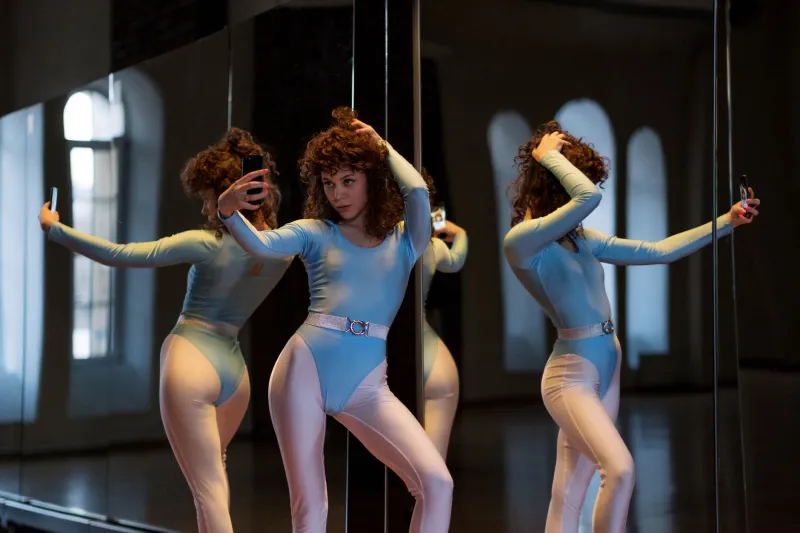
Let's do a quick autopsy on your last ten outfits.
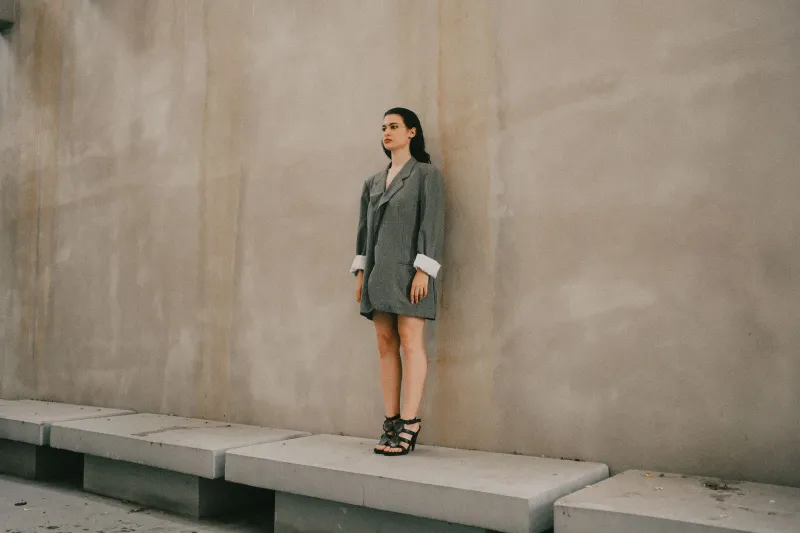
How many of them did you put on because they felt right? How many did you construct because you already knew — before you even zipped anything up — that it would photograph well against a brick wall, perform reasonably in the grid, and collect the kind of engagement that makes your chest feel warm for approximately forty-five minutes? Be honest. Nobody's watching. Well, actually, that's the whole problem. Everybody's watching. And it's making you dress like a corporate mood board.
The fit-check industrial complex is real, it is hungry, and it has been quietly digesting your personal style since the moment you first posted a mirror selfie and waited to see what the numbers said.
The Algorithm Doesn't Have Eyes, It Has Metrics
Here's what the algorithm actually rewards: contrast, legibility, trend adjacency, and the specific kind of "interesting" that reads well on a 4-inch screen at 1.5x scroll speed. It does not reward the jacket you found at a garage sale in rural Ohio that smells faintly of someone else's life story. It does not reward the proportions that only make sense in person. It does not reward the outfit that makes you feel like a minor deity but photographs like a laundry pile.
So you start self-editing. Not consciously, at first. You just reach for the piece that you know will read. The structured blazer. The clean sneaker. The color palette that sits in that sweet spot between "statement" and "broadly palatable." You tell yourself you're just dressing well. But what you're actually doing is optimizing. And optimization is the death of style.
Real style is inefficient. It's impractical. It makes no algorithmic sense whatsoever. That's literally the point.
The Feedback Loop Nobody Warned You About
Here's how the trap works, step by step, because it's almost beautiful in how perfectly engineered it is.
You post something genuinely weird — something that actually came from inside your brain rather than your explore page — and it gets thirty-seven likes. You post something safe and trend-adjacent and it gets four hundred. Your nervous system, which was not designed to be a social media analytics dashboard but has been thoroughly co-opted by one, files this information away. Safe equals dopamine. Weird equals silence. You do not need a psychology degree to predict what happens next.
You start curating yourself into a corner. The outfits get more coherent, more palatable, more photogenic. Your aesthetic becomes something you could describe in five words to a brand partnership coordinator. And somewhere in the process, the actual you — the one with the genuinely unhinged coat collection and the commitment to wearing things that make strangers do a double-take — quietly checks out.
You didn't lose your style. You traded it. For engagement. Which, when you say it out loud, is one of the bleaker sentences available to a person in 2024.
The Approval Addiction Is Dressed Up as Community
We need to talk about the way "community" gets used as cover for what is, functionally, a dependency.
Fashion communities online can be genuinely wonderful. People share discoveries, hype each other's thrift finds, argue passionately about whether cargo pants are back (they never left, they were just resting). That part is real and it's good. But there is a difference between a community that expands your taste and an audience that regulates it.
When you start mentally pre-screening your outfits through the imagined reaction of your followers before you even get dressed, you don't have a community. You have a committee. And no committee in the history of human civilization has ever produced anything genuinely interesting. Committees produce compromise. Compromise produces beige. We have been over this.
The most stylistically dangerous thing about seeking approval is that it works. That's the whole nightmare. You get the likes, you get the comments, you get the occasional DM that says "obsessed with this look" from an account with a sunset avatar. And it feels like validation of your taste when it's actually validation of your restraint.
What Dressing Without an Audience Actually Feels Like
There is a specific kind of freedom that lives on the other side of not caring what the grid thinks, and it is genuinely unhinged in the best possible way.
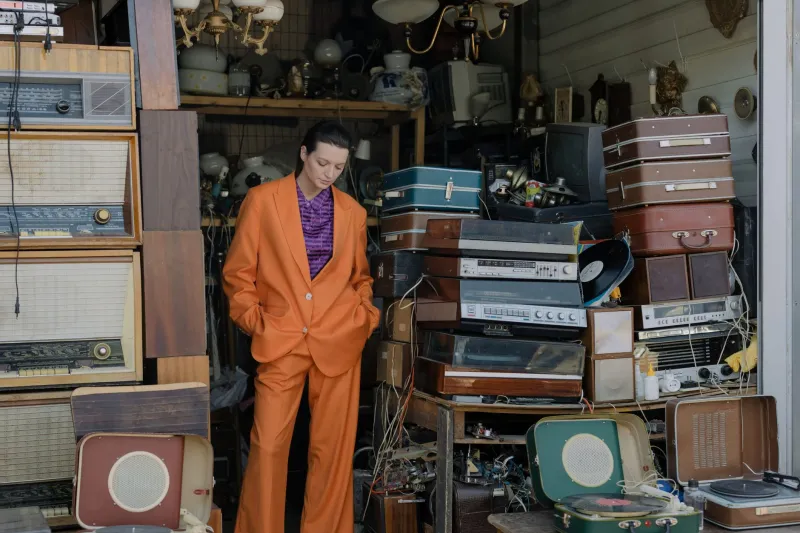
It feels like wearing the thing you bought three years ago that you've never posted because you couldn't figure out how to caption it. It feels like getting dressed in the morning for the pure physical pleasure of putting interesting things on your body and walking out the door into a world that didn't ask for a content warning. It feels like the outfit you wore to the grocery store at 11pm that made the self-checkout machine feel like a runway, even though nobody clapped, nobody saved it, and the algorithm will never know it happened.
That outfit? That was the real one.
The fits that live only in your memory and the memories of strangers who watched you walk by — those are the ones that actually belong to you. Everything you've dressed for a camera has a co-author. The camera, the platform, the invisible audience, the engagement expectations. The outfit you put on for nobody has exactly one author. And that author has genuinely excellent taste, if you'd just let them work.
How to Stage a Hostile Takeover of Your Own Wardrobe
You don't have to delete the apps. You don't have to go off-grid and start dressing exclusively in things you found in a barn. You just have to introduce a small but radical rule: get dressed before you think about whether it photographs well.
Put the thing on. Stand in front of the mirror. Ask yourself exactly one question: does this make me feel like someone worth knowing? Not someone worth following. Someone worth knowing. Those are different people, and only one of them has a genuinely interesting closet.
Post whatever you want after that. Or don't. But the outfit has to come first, and it has to come from the part of your brain that predates your follower count.
The algorithm is not your friend. It is a very sophisticated machine that has learned what you respond to and is feeding it back to you in a loop, getting tighter every season. You can admire the engineering while still refusing to let it dress you.
Your wardrobe is not content. It's a self-portrait. And the only person who should be holding the brush is you.