Cut, Rip, Repeat: The Unhinged Joy of Destroying Clothes to Make Something Worth Wearing
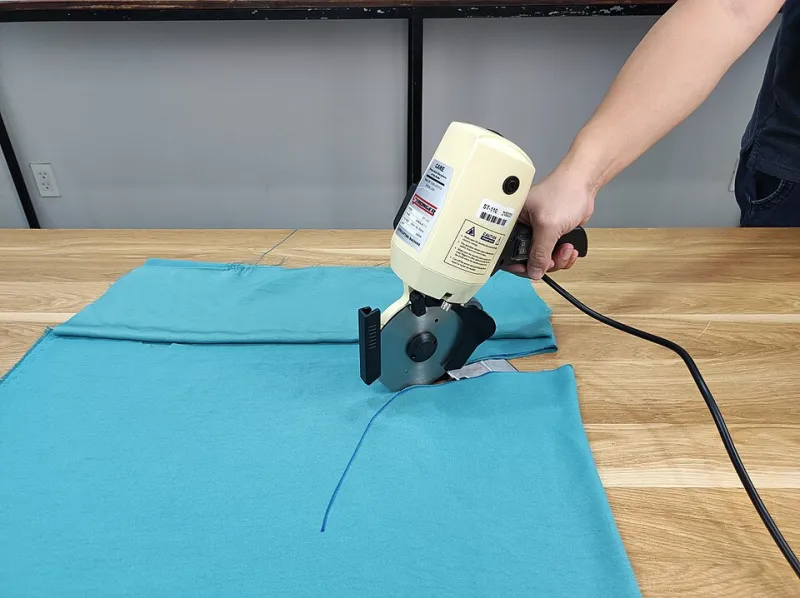
Photo: Thiet Bi M5s, CC BY-SA 4.0, via Wikimedia Commons
Somewhere in America right now, a very serious person is paying full retail for a blazer that looks exactly like seventeen other blazers. They will wear it to brunch. They will call it their "investment piece." They will hang it next to four identical blazers and feel deeply satisfied.
You are not that person.
Or maybe you were, once. But then something cracked open — a thrift store find that was almost perfect, a designer piece that fit the shoulders but not the soul, a blouse that screamed potential through a fog of someone else's vision — and you thought: What if I just... wrecked it a little?
Welcome to the Church of Intentional Destruction. Services are held whenever you pick up a seam ripper.
The Philosophical Case for Taking Scissors to Something Expensive
Here's what the fashion industry doesn't want you to internalize: buying clothes is passive. Wearing clothes is passive. Reconstructing clothes — actually dismantling a garment down to its bones and rebuilding it around your specific, weird, irreplaceable self — that's authorship.
There's a reason the most interesting people you've ever met dress like they have a personal tailor who is also slightly unwell. It's not because they have money. It's because they've stopped accepting the premise that clothes come finished. Every hem is a suggestion. Every seam is a conversation starter. Every shoulder pad is a threat waiting to be either removed or doubled down on.
Deconstruction fashion has roots in heavy-hitting designers — Rei Kawakubo of Comme des Garçons built a career on clothes that looked deliberately unfinished, Martin Margiela turned exposed linings and raw edges into luxury, and Helmut Lang made intentional damage feel colder and smarter than anything pristine. These people weren't destroying fashion. They were exposing what it was always made of.
You can do the same thing with a Goodwill blazer and a YouTube tutorial.
What You Actually Need (It's Less Than You Think)
The barrier to entry here is embarrassingly low, which is honestly part of the appeal. You don't need a sewing room. You don't need a serger. You don't need to know what a serger is.
You need:
- A seam ripper. The single most underrated tool in fashion. Three dollars. Changes your entire relationship with clothing.
- Sharp fabric scissors. Not the ones from your junk drawer that also cut cardboard. Dedicated fabric scissors, because the difference matters and you'll feel it immediately.
- Tailor's chalk or a washable marker. For marking before you commit.
- An iron. Boring but essential. Raw edges behave better when they're pressed.
- Needle and thread, or a basic sewing machine. Optional depending on how far you want to go.
- The willingness to ruin something. This is the one you can't buy.
That last item is the real cost of admission. The first time you take scissors to something, your hands will shake a little. That's the conditioning talking — the deeply American consumer instinct that says destroying a garment is waste, is wrong, is something you'll regret. Push through it. The shake goes away after the first cut.
The Techniques That Actually Slap
Raw-edge cropping is where most people start, and for good reason — it's immediate, it's dramatic, and it requires exactly zero sewing ability. Cut a sweatshirt. Cut a blazer. Cut a floor-length thrifted dress into something that hits at an angle nobody planned. Don't finish the edge. Let it fray. Fraying is texture. Fraying is character. Fraying is the garment admitting it's been through something.
Seam deconstruction is the next level. Use your seam ripper to open up the side seams of a shirt, then re-close them differently — tighter, looser, asymmetrical, with a visible exterior seam that reads as intentional detail. This is how you make a $6 thrift store button-down look like something that costs a concerning amount of money.
Panel swapping is where things get genuinely unhinged in the best way. Buy two garments — ideally in contrasting fabrics or patterns — deconstruct both, and rebuild one piece using panels from each. A denim jacket with a velvet back. A blazer with a plaid sleeve from a different blazer entirely. A dress with a bodice from one decade and a skirt from another. This is the technique that makes people stop you on the street and ask where you got it, and you get to say I made it, which is the most powerful sentence in fashion.
Intentional distressing goes beyond the pre-distressed jeans that every fast fashion brand sells and immediately looks fake. Real distressing is localized, personal, and specific to how you actually move. Sandpaper on stress points. A razor blade dragged lightly across a seam. Bleach applied with a brush, not a bucket. The goal isn't "destroyed" — it's "lived in by someone interesting."
The Thrift Store Is Your Supply Chain
If you're not already doing your sourcing at Goodwill, Salvation Army, thredUP, or your local consignment shops, you're paying too much for your raw materials. The entire point of deconstruction fashion is that the garment you start with is not the garment you end with — which means spending $200 on something you're about to cut apart is a choice you don't have to make.
Thrift stores are also where you find the most interesting base materials. Structured 1980s blazers with insane shoulder architecture. Silk blouses with bizarre prints that become something else entirely when cropped. Men's dress shirts in heavy cotton that reconstruct beautifully into something that reads as entirely different. The weirder the original, the more interesting the outcome.
Bring your seam ripper to the store and test garment construction before you buy. Check how the seams are finished, whether the fabric is worth working with, whether the bones of the thing are worth your time. You're not shopping. You're sourcing.
The Part Where You Give Yourself Permission
There's a specific kind of freedom that lives on the other side of the first cut, and it's hard to explain to someone who hasn't felt it. It's the realization that clothes are just fabric and thread, that fashion is just an industry, and that your body and your vision are the only things that actually matter in the transaction.
You stop waiting for a brand to make the thing you want. You stop settling for "close enough." You stop paying for someone else's idea of who you should be.
The seam ripper isn't a weapon against fashion. It's a key. It opens up every garment into a question: What could this actually be? And then you get to answer it, in your own handwriting, with your own hands, in something nobody else is wearing because nobody else is you.
Cut something tonight. See what happens. The worst outcome is a ruined thrift store shirt. The best outcome is the best thing you've ever worn.
Both are worth it.